

qffz.over-blog.com/
18 Janvier 2021

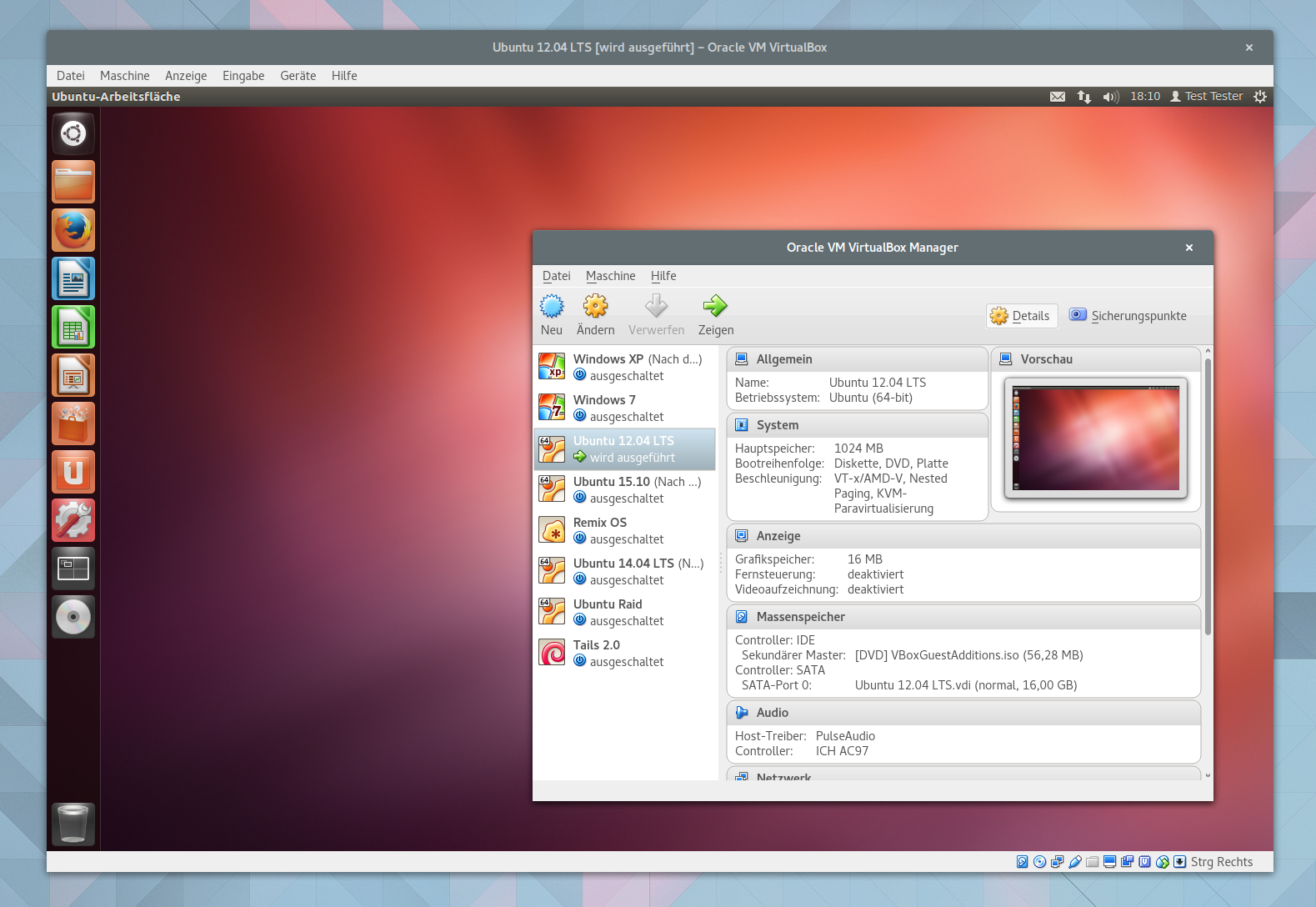
Want to know how to install Ubuntu on Virtualbox?
Ubuntu 19.10 ‘Eoan Ermine' has been announced officially and available to download for Desktop, Laptops, and servers. Here we will see, how to download its latest ISO image to install on VirtualBox VirtualMachine. The current latest version of the Ubuntu that 18.10 is ready for download and comes with lots of additions.
If yes then this step by step guide is definitely for you.
In the recent posts, I have already talked about how to install android on pc and also ChromeOS on Virtualbox.
And now I am here writing this post on installing Ubuntu on Virtualbox virtual machine.
Everyone knows Ubuntu is one of the best free open source Operating system.
And is considered to be the best OS for programming.
But the only downside I feel between windows 10, 7 and Ubuntu is that in Ubuntu we have to run codes for every small action.
And whereas in windows 10 or 7 it is pretty much easier.
But what if you can dual boot or you can use both Ubuntu & Windows 10 on the same PC at the same time.
And this post will definitely help you in doing so.
Let's see How.
But before we dig in further.
Please make sure that you have downloaded & installed the given files from the given link.
Oracle Virtualbox: Download Link
Ubuntu ISO for VirtualBox: Download link (18.04 Image)
Extension Pack: Download link
You can see the 64bit ISO image file is really big. Meanwhile, you can learn how to create an ISO from bootable USB.
And this step by step guide is divided into two parts: First creating a virtual machine using Virtualbox and then installing Ubuntu on Virtualbox.
Now if you are done with these files.
Let's go further…
Note:- Please Enable the VT-x (Virtualization feature) or AMD-V feature in your BIOS settings of the host system. Digitally remastered skyrim.
The first step is to Open or Run Virtualbox by double-clicking on it.
To create a new virtual machine Click on the 'New' Icon button.
Now in the name section, type Ubuntu 18.04 and it will automatically detect the Type as Linux and Version as Ubuntu (64-bit). Click on Next.
Now select the amount of RAM memory to be allocated to the Linux virtual machine. And to Install Ubuntu Linux in Virtualbox 2048MB is enough.
Next step is to create a virtual hard drive for this Ubuntu VM. And the recommended size is 10Gb. Click on Create.
Now select the hard disk file type as VDI (Virtualbox Disk Image). And then Next.
Now choose the type of Storage on the physical hard disk as 'Dynamically allocated'. Click Next.
And then select File location and size in vmbox of Ubuntu. Click Create.
Now it's time for final configuration settings for Linux Ubuntu. So click on the Settings icon.
And on the next screen, Go to Storage and in the Storage Devices section click on the Empty Dvd Image Icon and then in the Optical drive section click on Choose a disk file…
Now browse to the Ubuntu 18.04 Virtualbox image that you have downloaded earlier.
Bonus Tip:- Learn to boot OS from USB in Virtualbox, in place of booting from ISO file.
That's it! You have successfully created the Ubuntu Linux virtual machine using Virtualbox.
And now it's turn for the next part of this guide.
Note:- This process is also applicable if you are installing Ubuntu on PC without using Virtualbox. But for that, you need to create a bootable USB drive for Linux.
And to install it on PC, you need to plug in the USB drive and Start the CPU. But here we are installing it on a Virtual box. So we will start the Vbox & follow the below steps.
Click on the 'Start' icon to start or boot the virtual Linux machine VM.
Now, wait for few seconds while ubuntu is loading files & booting up.
Note:- Here you will see two options, Try Ubuntu is a type of guest additions but we will install it.
Now select the language from the left-hand side section. Like I am selecting English and then Click on Install Ubuntu.
And then Select the Keyboard layout according to your preference & Click on Continue.
Now Click on Normal Installation and then in Other options Check the Download updates while installing Ubuntu and then also check the 2nd option Install third-party software. And Click on Continue.
Now in the Installation type Select Erase disk and install Ubuntu. And Click on Install Now & then Continue.
Then it will check for the location and click Continue.
And then Who are you? a section where you have to fill in your personal details. And Continue.
Now, wait for a few minutes while Ubuntu Linux is installing on PC.
Note:- After installation is completed, Remove your ISO file from the Storage Settings. And if you are installing Ubuntu on PC then Eject your USB drive.
Now Click on Start to run Ubuntu Linux in Virtualbox.
And Done! You have successfully installed Ubuntu 18.04 on Virtualbox PC.
That's it for now…
So that's how you can easily install Linux Ubuntu from ISO file in Virtualbox Windows 10. And you can also follow the same method for QEMU & VMware.
Stay tuned for the next post on How to install ubuntu on Virtualbox mac.
Feel free to share your thoughts and also tell us if you know any better way to How to Install Ubuntu on Virtualbox Windows 10.
If you liked this post, Don't forget to share this helpful post with your friends.
There are many ways to get started if you'd like to experiment with Linux. In this article I'am going to explain one using VirtualBox on top of an MS Windows or Mac OSX system. It could also be used on top of an already existing Linux installation, and for experimentation it might be better to use this than the Operating System you already have on your computer.
It could also run on Solaris, but who has Solaris on their notebook or desktop computer.
This method is not the simplest, but it will make it easier to understand the system and other options (e.g. Vagrant use this process behind the scene.
The installation and all the setup can take 1-2 hours. Much shorter when you do it for a second time.
A very quick recap:On one hand Linux officially refers to the 'Linux kernel' which is the core of what makes a computer work for you.On the other hand most people use the word 'Linux' to describe a 'Linux Distribution' that includes 10s of thousands of programs, including the Linux kernerl. A 'distribution' is like a package in which some team collected many useful software. Editors, games, databases, web servers, etc. and of course the kernel.
There are many distribution DistroWatch has a list of 'top 100'. In this article we are going to use Ubuntu, one of the popular distributions.
Visit Ubuntu Server and specifically theUbuntu server download page.Select the most recent one. At the time of this writing it is Ubuntu Server 17.10.1because it was released in 2017 October. (The 1 is just a sub-release number, not the date.)
An ISO image is a single file that looks like a CD-rom from the inside. They can be burned on physical CDsor can be used by other software (e.g. VirtualBox) to pretend it is a real CD.
We'll use the downloaded file in a minute. While we are waiting for it to download, let's do something else:
VirtualBox is an application that can run on MS Windows, Mac OSX, or Linuxand then it can create Virtual computers. From the inside that virtual computer will look like any other computer.It will have some memory, CPUs, disk(s), a CD player, a video card with some memory, network card(s). Whatever you decide.The Opearting System installed in it, which we'll refer to as the guest, won't really know it is not running on real hardware.
From the point of view of your operating system, the one that you already have on your computer (Most likely some version of MS Windowsor Mac OSX) it is just a directory with a few files in it.
When your guest operating system is running it is allocated a certain amount of memory, CPU, etc. just like any other application on your system. If you turn off your guest operating system, then all that is freed up and it will only take up space on your hard-disk.
You can remove those files any time, but then you will lose your installation.
Visit VirtualBox and on the big blue button to get to the Virtualbox download page. Select the latest version (for me it was VirtualBox 5.2.8) and the name of your host Operating System. So probably Windows or OSX.
It will download an exe file on Windows or dmg file on OSX. Once the download ended, run these programs, agree to everything you usually agree when you install a program. It is the standar Windows and OSX installation process. Nothing fancy.
A small warning: the different versions of VirtualBox have slightly different UI and Mac OSX and MS Windows versions also differ from each other. The screenshots you see here are from Mac OSX. Most of the screenshots were taken by Yonit Gruber-Hazani for our DevOps Workshops. In your version they might look slightly different.
Open VirtualBox - Press the 'new' button on the left
Type in any name
If the name starts with 'ubu' it will setup the type to Linux and the version to Ubuntu 64-bit automatically.If you go with a totally different name (e.g. foobar), then you can slect the Type and Version yourself.
Click on Continue.
Continue the setup with the values VirtualBox is suggesting for you.
You should not worry about the exact values. Descargar autotune 2020. Most of these can be changed later on and it is for your experimentatin anyway.So the worst case you go over the installation again and learn it even better.
Remember what your guest operating will see as a 'hard disk' is a single file on your host operating system.
When you are done you'll be back to the opening screen of VirtualBox and you'll see your box listed on the left hand side.In this screenshot you see 3 boxes:
Insert the CD in the virutal CD driver of VirtualBox
You can now check the Settings of your box where you can change most of the parameters. (Don't do that just yet :).
If this was real hardware you'd have a physical CD-rom and you'd want to instert it in the CD drive to boot from it. As our machine is virtual, and as we only have an ISO image (has the download finished by now?) we do this in software. We make a small change in the configuration of our VirtualBox image to pretend we have a CD in the drive.
After you saved it you can click on 'Start' to launch the new Linux machine.
Once you clicked on the 'Start' button of your VirtualBox image, it will 'turn on the computer'.As with real hardware it will look for a storage device that can be booted. The first one it checks is the CD drive.(The sequence is usually configured in the BIOS of the computer.)As we 'inserted' our CD in the drive the machine will find it and start to boot from it that will step youthrough the installation process.
When you get to the hostname section choose whatever you like. 'ubuntu' is fine for this installation.
When the installation is complete, it will unmount the Ubuntu image we setup at the beginning.Continue to reboot:
Linux console login screen
When you are done installing after the reboot the host screen should look like this:
Type in your username and password. You should see a prompt now.
That's it. Steam summer sale skyrim. You have a working Ubuntu Linux server in a VirtualBox image running on your personal computer.
In the next article we'll continue with some experimentation, but if you are familiar with Linux you can already start using it.
One thing I'd mention here is how to run off the machine.
Type in (without the '$' that just represents the prompt in our example:
It will ask for your password. Once you typed it in it will shut down the Linux server and then it will power off your VirtualBox image.
Published on 2018-03-09


/image%2F6308901%2F20210327%2Fob_41d2dc_blender-workstation-2018.png)
/image%2F6308901%2F20210215%2Fob_eec6d6_screen-and-shot.jpeg)
/image%2F6308901%2F20210215%2Fob_025352_eso-beta-test.jpeg)
/image%2F6308901%2F20210215%2Fob_f9dcda_permainan-feeding-frenzy.jpeg)